No
Black Box
An AI reviews compliance documents, and it is sometimes wrong. So it shows the text it read, names what it could not confirm, and never overwrites a human decision.
Between the verdict and the decision.
One missing document fails the whole audit.
A sustainability manager gathers certificates, energy reports and supplier audits, then hands the set to external auditors once a year. Today that happens over email and shared drives.
A score is not an explanation.
Verity's AI verifies whether a document satisfies a requirement, and it is sometimes wrong. A confidence number asks the reviewer to believe a verdict they cannot check. In compliance, acting on a wrong one fails the audit.
Trust is not a component. It's a system of patterns.
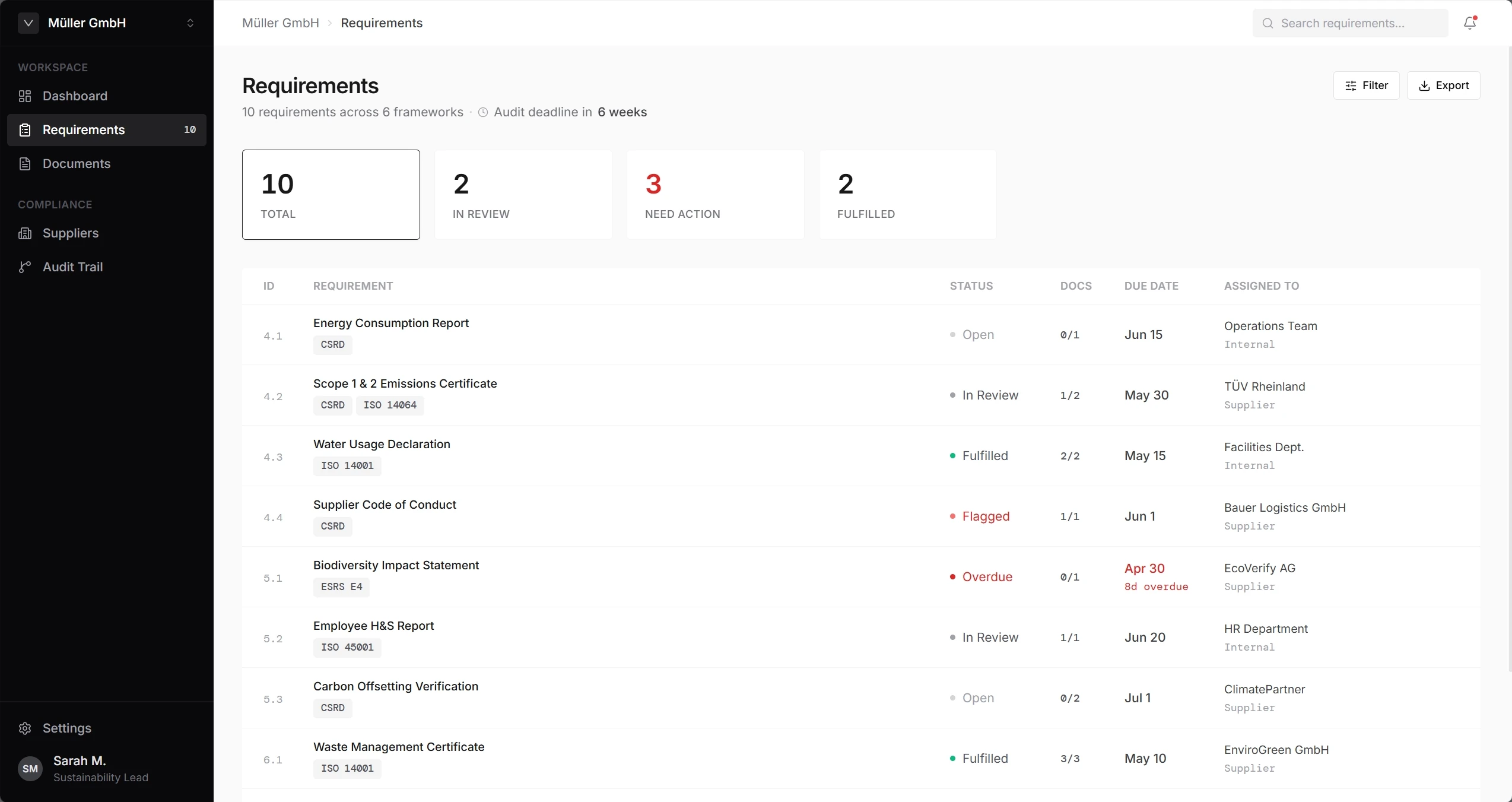
Every requirement, one surface.
Status, owner and due date for all forty, so a gap is visible long before the deadline is.
Evidence, not verdicts.
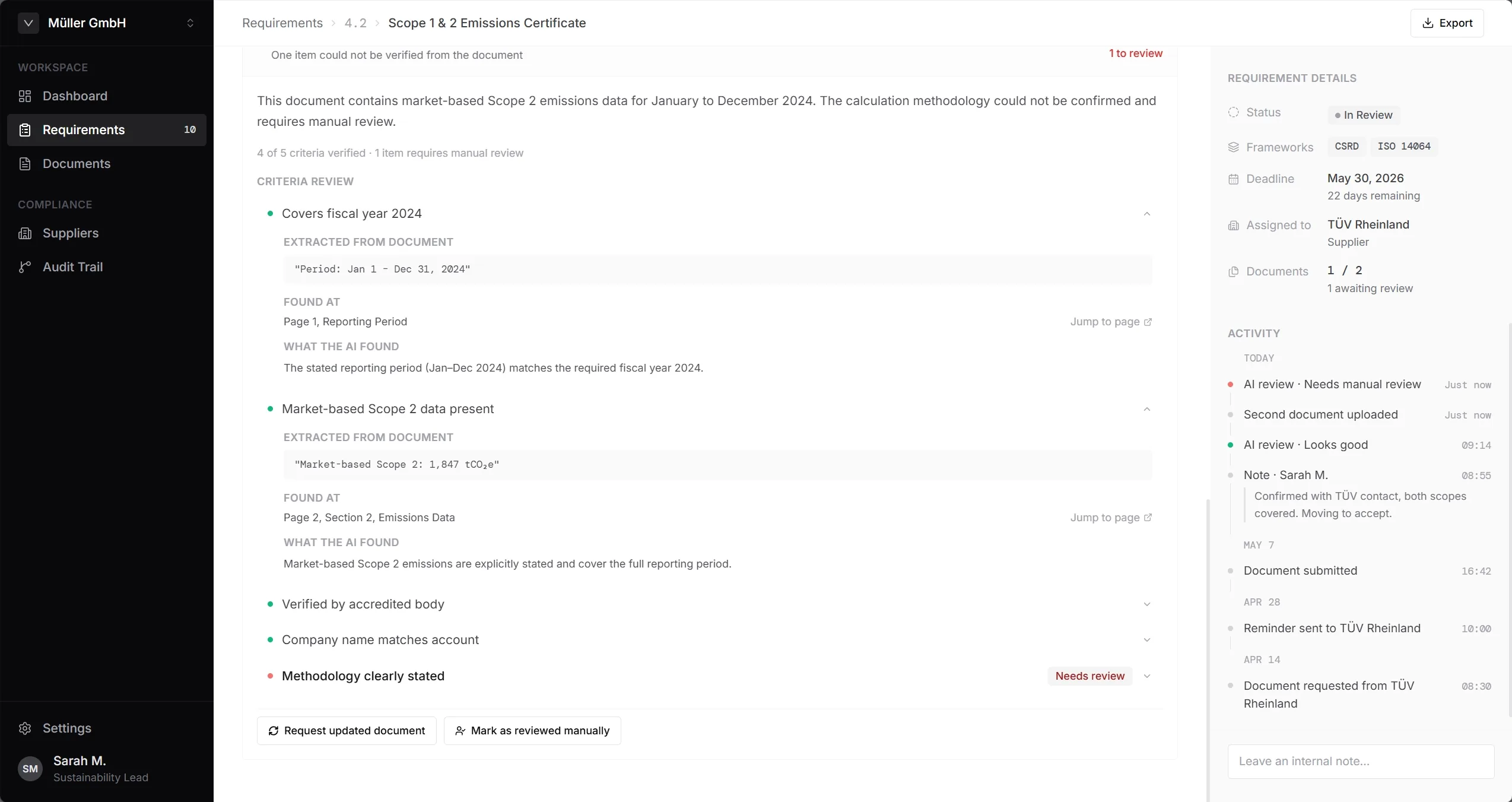
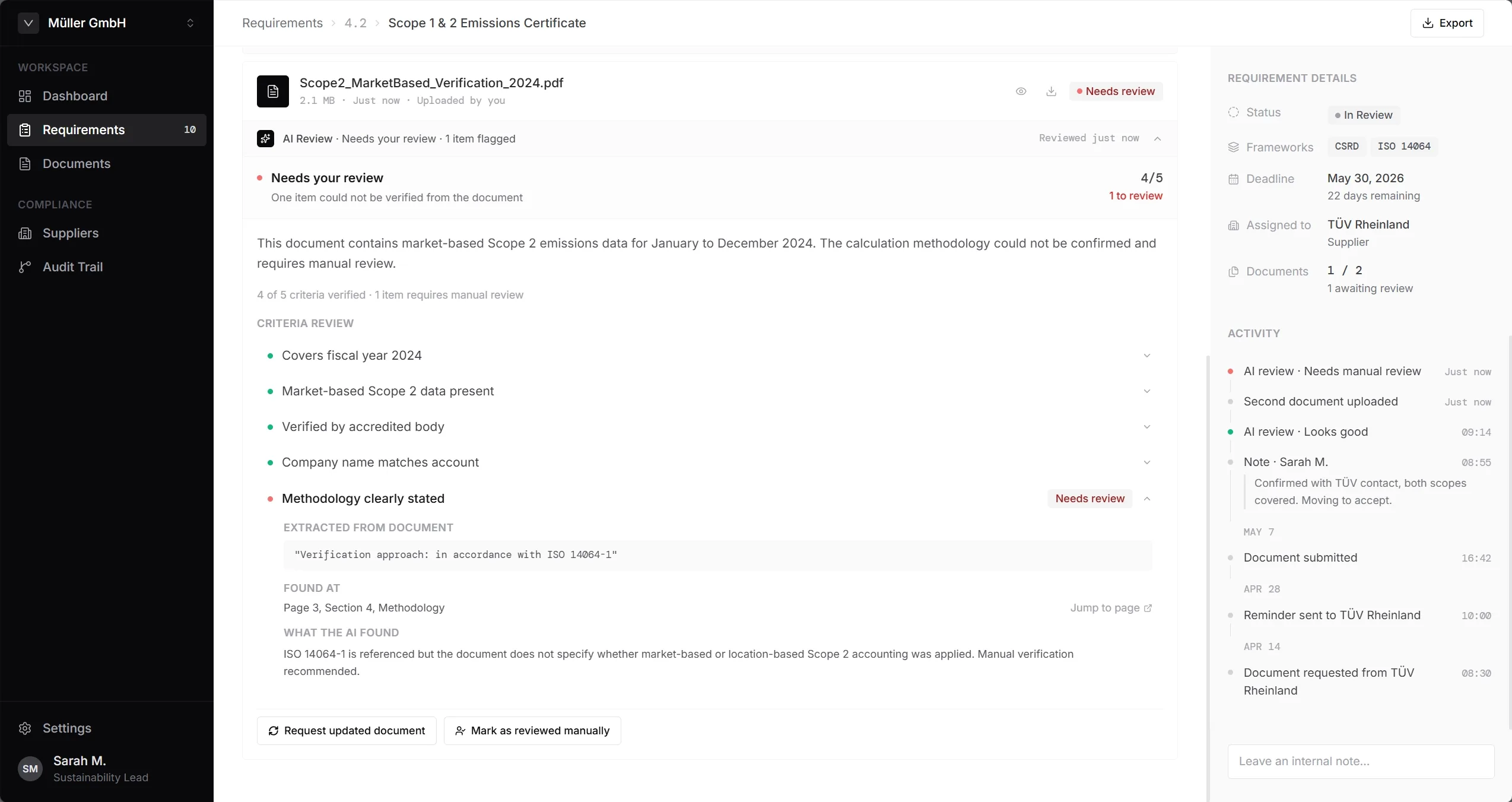
Every criterion opens to the exact text the AI read, the page it came from, and one line on what it found. The label says what the AI found, never why this matches. Whether the evidence is enough stays a human call.
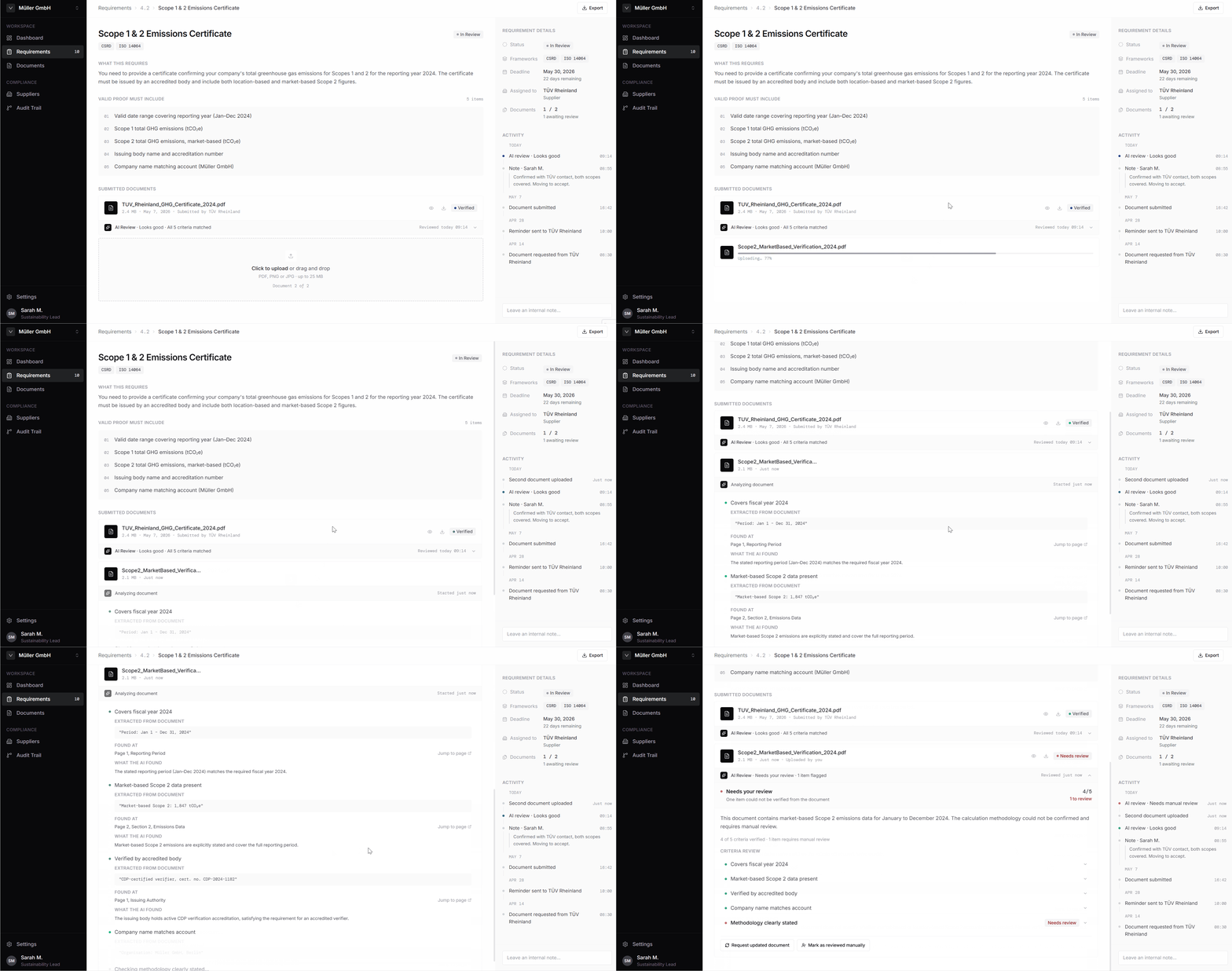
The reasoning arrives first.
Criteria resolve one at a time as the document is read. By the time the verdict lands it is a summary of what was already on screen, not the output of a spinner.
It names what it can't confirm.
Not verification failed. The exact gap: ISO 14064 is cited, but the document never states whether Scope 2 was market-based or location-based. The criterion is flagged for review and links to the section the AI read.
Override is first-class.
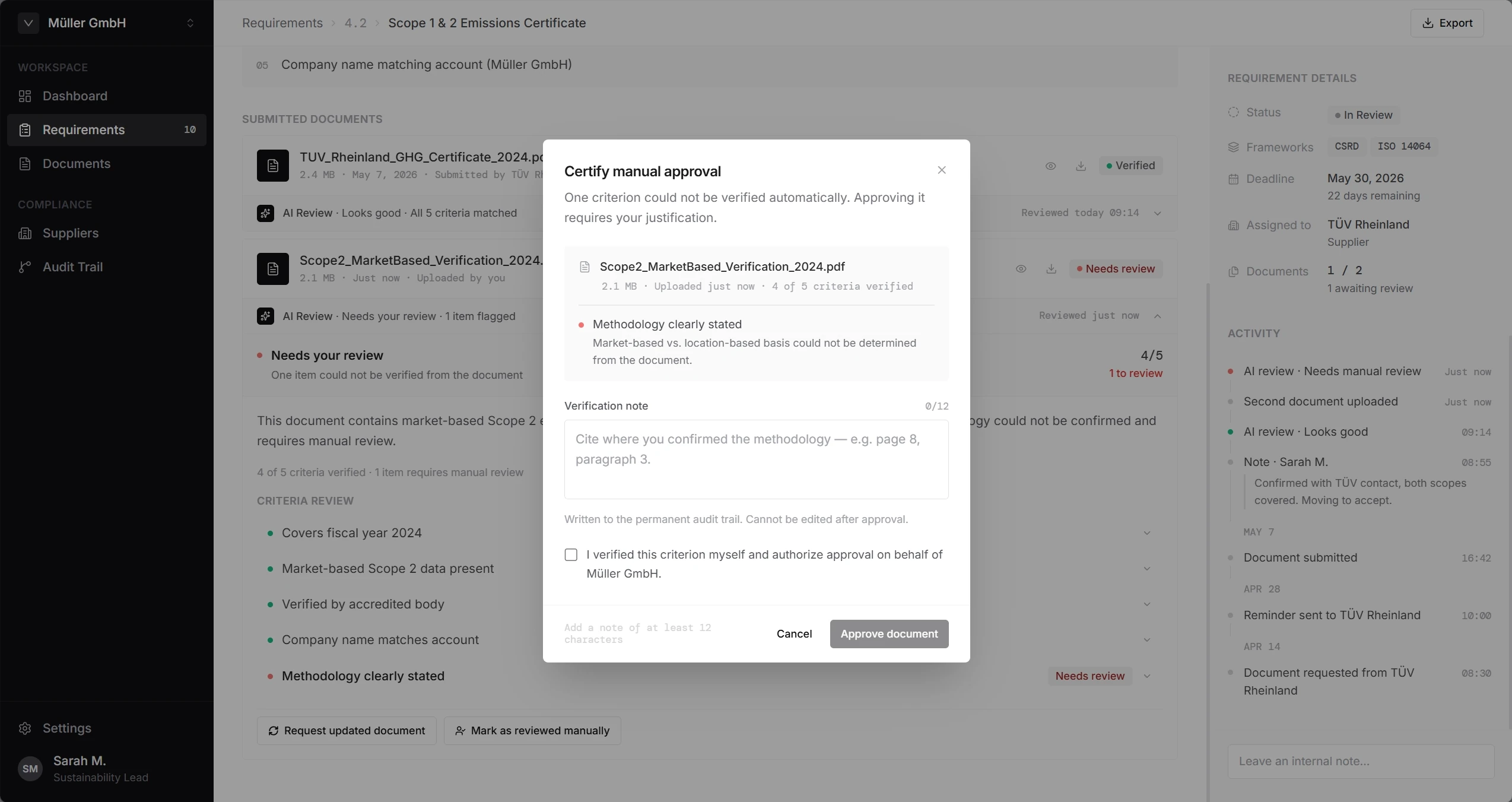
Going against the AI takes a written reason. The note is logged beside the original flag, in sequence, timestamped. The finding is never deleted. Both layers stay visible to whoever checks this decision later.